Neighbourhoods
The neighbourhood health shop still matters.
Not every useful choice arrives in a delivery box. Sometimes it begins with a familiar shopkeeper and one good suggestion.
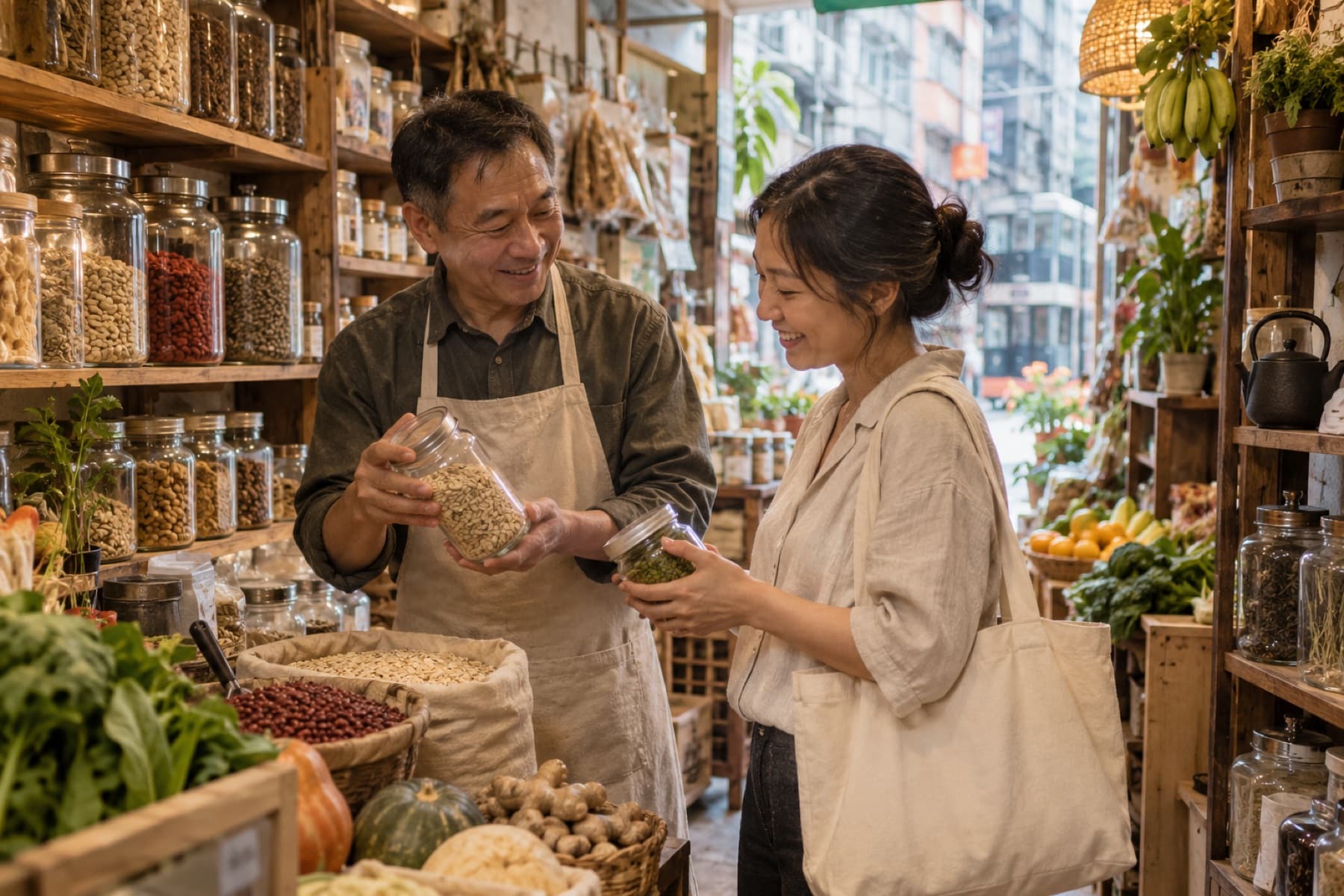
There is a small kind of relief in walking into a shop where somebody can answer a plain question. Which oats stay firm overnight? Is there a tea that is pleasant without sugar? What can I keep at the office for the afternoon when lunch was too small? These are not glamorous wellness questions. They are the questions that make up a week.
Online shopping offers range and speed, and sometimes that is exactly what we need. A neighbourhood shop offers something different: context. The person behind the counter sees what people actually come back for, which product sounds better than it tastes, and which cheaper alternative quietly does the job. That knowledge is local, practical and built through repetition.
Useful beats miraculous
The best shops are comfortable saying that an ordinary ingredient may be enough. They do not need every jar to promise transformation. They help customers compare, explain how something is used and admit when a product is mostly expensive packaging. Trust grows through small acts of restraint.
That restraint matters in wellness, where uncertainty can be profitable. A friendly shop is not a substitute for medical advice, and a responsible owner knows the boundary. They can help you find dinner ingredients or a snack you enjoy without pretending to diagnose fatigue from across the till.
A shop can hold a neighbourhood
Independent shops remember patterns. A parent asks for the same lunchbox staples; an older neighbour pauses for tea; a runner buys something small on the way home. These exchanges are not dramatic, but they create recognition—a sense that wellbeing belongs in ordinary streets and ordinary budgets, not only behind the doors of a members’ club.
So when a useful local shop earns your trust, tell someone and return when you can. Buy the unremarkable thing you genuinely use. Ask the honest question. Let the relationship stay small and real. A healthier city is partly made from these modest places continuing to keep their lights on.
This article expresses an editorial point of view and is for general information only. It is not medical advice.